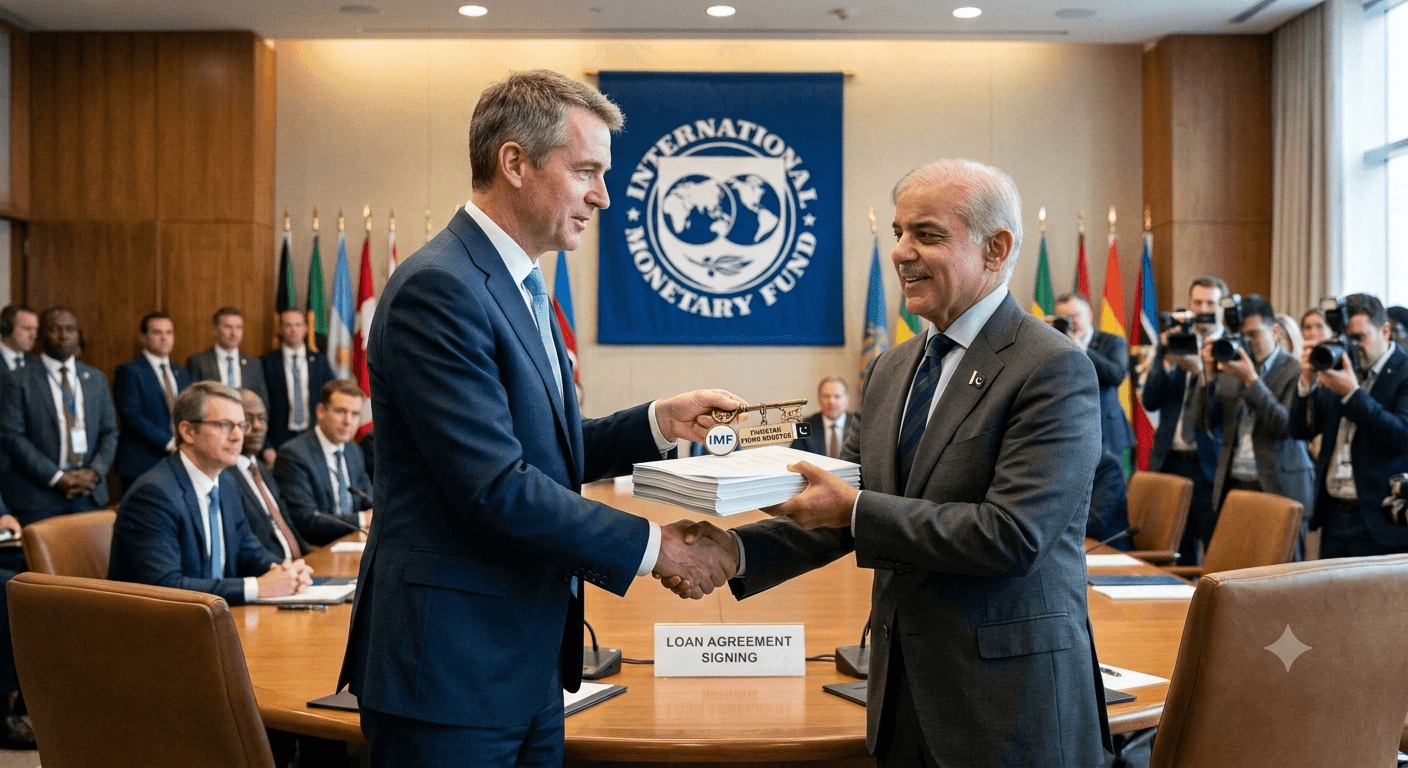
IMF Approves $1.32 Billion for Pakistan as Economic Reforms Stay on Track
The International Monetary Fund (IMF) Executive Board has approved the latest review of Pakistan’s economic reform programme, allowing the country to receive $1.32 billion in fresh financing under its ongoing support arrangements.
The approval marks another important milestone for Pakistan’s $7 billion, 37-month IMF programme, which aims to stabilize the economy through fiscal discipline, structural reforms, and measures that support sustainable long-term growth.
Pakistan to Receive $1.32 Billion
Following the successful completion of the review, Pakistan will receive:
Approximately $1.1 billion under the Extended Fund Facility (EFF)
Around $220 million under the Resilience and Sustainability Facility (RSF)
With this latest disbursement, Pakistan has now received approximately $4.8 billion under both financing arrangements.
Finance Minister Muhammad Aurangzeb welcomed the approval, stating that it reflects Pakistan’s continued commitment to implementing difficult but necessary economic reforms.
IMF Recognizes Progress on Economic Reforms
According to the IMF, Pakistan successfully met several important structural benchmarks during the review period, including:
Tax policy reforms
Revenue mobilization measures
Energy pricing adjustments
Fiscal discipline improvements
Macroeconomic stabilization efforts
The Fund noted that Pakistan has maintained strong implementation of its reform agenda despite growing uncertainty in the global economy.
Economic Indicators Show Improvement
The IMF highlighted several positive developments in Pakistan’s economy during the first nine months of FY2025-26.
GDP Growth Accelerated
Economic growth has picked up compared to previous years, indicating a gradual recovery supported by improved macroeconomic stability and policy reforms.
Inflation Remains Manageable
Although inflation increased due to higher international commodity prices and adjustments in domestic energy tariffs, the IMF believes these price increases were necessary to improve the financial health of Pakistan’s energy sector.
The State Bank of Pakistan has maintained a relatively tight monetary policy to control inflation and stabilize inflation expectations.
Current Account Remained Balanced
Pakistan also maintained a broadly balanced current account during the review period, helping reduce external vulnerabilities.
Foreign Exchange Reserves Continue to Improve
One of the major achievements highlighted by the IMF was the improvement in Pakistan’s foreign exchange reserves.
Foreign exchange reserves increased from:
$14.5 billion in June 2025
$16 billion by December 2025
The IMF expects reserves to continue strengthening over the medium term through continued policy discipline and international financing support.
IMF Warns About Global Risks
Despite Pakistan’s progress, the IMF cautioned that global economic conditions remain uncertain.
The ongoing geopolitical tensions and conflict in the Middle East continue to pose risks for developing economies, including Pakistan.
The Fund emphasized that maintaining prudent economic policies will be essential to protect Pakistan from future external shocks.
Fiscal Policy Must Remain Disciplined
The IMF advised Pakistan to continue its gradual fiscal consolidation strategy by focusing on:
Expanding the tax base
Improving tax compliance
Increasing revenue collection
Enhancing public financial management
Improving government spending efficiency
According to the IMF, stronger fiscal discipline will help reduce vulnerabilities while creating more room for investment in education, healthcare, and social protection programmes.
Tax Reforms to Continue
Pakistan’s reform agenda places significant emphasis on improving tax collection.
The government plans to:
Broaden the tax net
Increase documentation of the economy
Improve compliance across sectors
Expand taxation in under-taxed industries such as retail and agriculture
These measures are expected to gradually increase Pakistan’s tax-to-GDP ratio over the coming years.
Energy Sector Reforms Remain a Priority
The IMF reiterated that reforms in Pakistan’s energy sector remain central to the programme.
Authorities are expected to continue:
Regular electricity tariff adjustments
Gas price revisions
Fuel pricing aligned with international costs
Measures to reduce circular debt
Financial restructuring of the energy sector
The Fund also emphasized protecting low-income households through targeted subsidies while maintaining cost-reflective pricing.
Exchange Rate Flexibility Recommended
The IMF believes that a flexible exchange rate remains one of Pakistan’s strongest tools for managing external economic shocks.
The Fund encouraged authorities to:
Allow market-based exchange rate adjustments
Continue rebuilding foreign exchange reserves
Develop the foreign exchange market
Gradually liberalize foreign exchange regulations
These measures are expected to improve investor confidence and strengthen external stability.
Banking Sector and Financial Stability
The IMF also highlighted the importance of maintaining financial sector resilience.
Recommendations include:
Ensuring banks remain adequately capitalized
Addressing capital shortfalls in microfinance institutions
Strengthening financial supervision
Preserving overall financial stability
Governance and Privatization Reforms
The Fund urged Pakistan to continue implementing governance reforms aimed at improving transparency and reducing corruption.
Other major priorities include:
Reforming state-owned enterprises (SOEs)
Accelerating privatization
Simplifying business regulations
Improving the investment climate
Removing unnecessary regulatory barriers
These reforms are expected to improve economic competitiveness and attract greater domestic and foreign investment.
Next Steps Under the IMF Programme
Pakistan’s reform roadmap over the coming years includes:
Maintaining a primary budget surplus of approximately 2% of GDP
Continuing structural reforms
Improving tax administration
Expanding social protection programmes
Reducing energy sector losses
Supporting long-term fiscal sustainability
An IMF mission is expected to visit Islamabad to discuss Pakistan’s next federal budget and assess further progress on structural reforms.
What This Means for Pakistan
The IMF’s approval provides immediate financial support while reinforcing international confidence in Pakistan’s economic reform programme.
The fresh inflows are expected to strengthen foreign exchange reserves, improve external financing, and support macroeconomic stability.
Although challenges remain—including inflation, global uncertainty, and the need for continued reforms—the successful completion of the review signals that Pakistan remains on track under its IMF programme.
For businesses, investors, and financial markets, the latest approval offers greater confidence in the country’s economic direction while highlighting the importance of sustaining reform momentum over the long term.